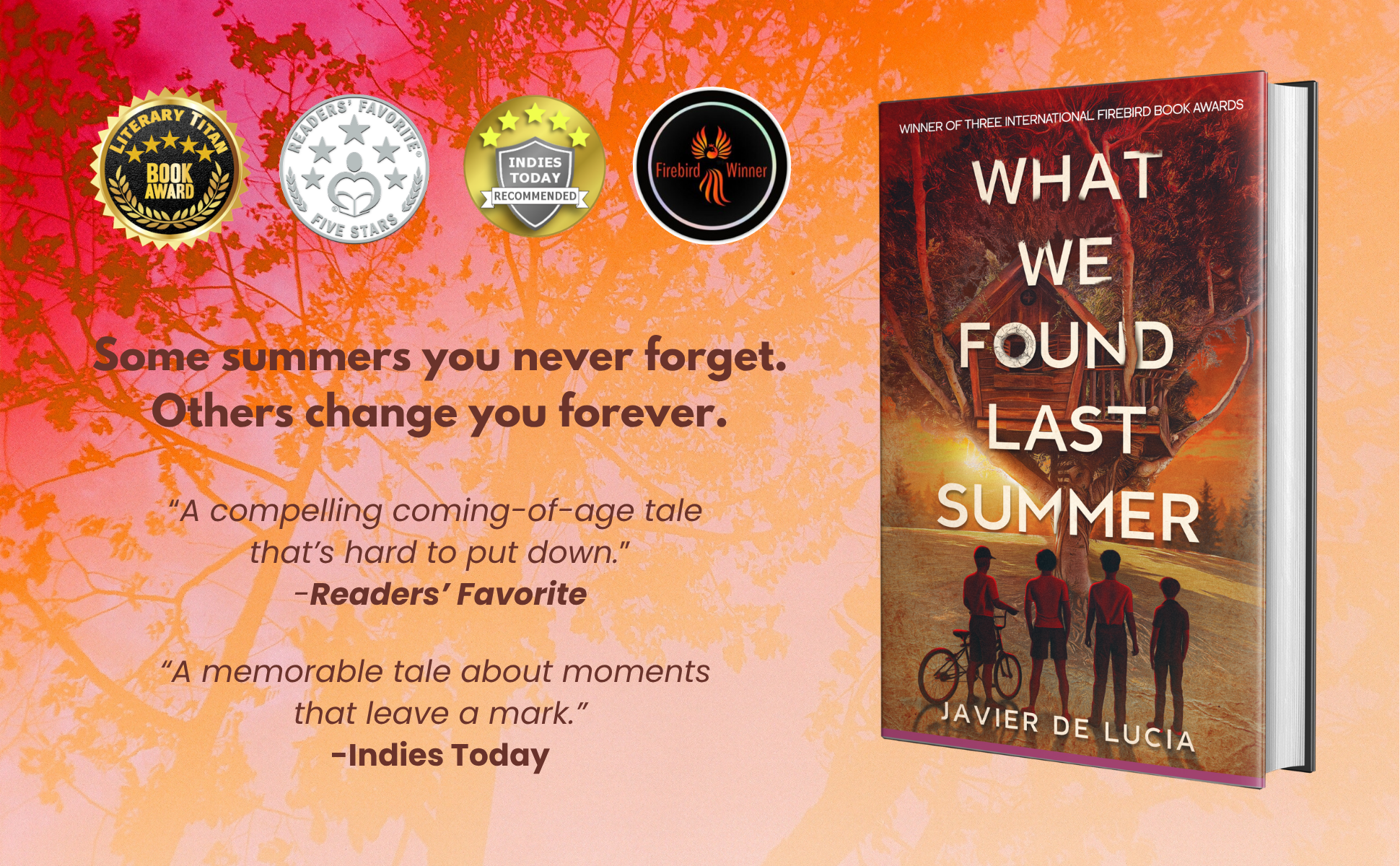
What We Found Last Summer | Available on Amazon and Kindle Unlimited
Looking for a great summer read?
For fans of 1980s coming-of-age stories, suburban noir, childhood mysteries, and nostalgic suspense.
What We Found Last Summer is the kind of book you'll want to finish in one sitting. Reviewers call it "compelling," "propulsive," "memorable," and "hard to put down."
eBook Available on Amazon. Read free with Kindle Unlimited.
What We Found Last Summer | Official Book Trailer

⭐⭐⭐⭐⭐
What We Found Last Summer is a compact, propulsive coming-of-age thriller built around a very 1980s kid-adventure setup: bikes, woods, fireworks, treehouses, comics, neighborhood rivalries, and parents who are just far enough away for trouble to bloom. The hook is simple and effective: Calvin and Derek find a bag of mob money in an abandoned treehouse, and their summer suddenly becomes much bigger than scraped knees and boyhood dares. The book knows exactly what it's playing with when it invokes "Kids on bikes," but it gives that familiar shape a sharper adult edge.
What makes the story work is that it isn't just nostalgia dressed up as danger. Author Javier De Lucia fills the neighborhood with specific, lived-in relationships: Calvin and his brother Ryan, Calvin and Ravi's strained friendship, Derek's restless bravado, Rochelle's divided loyalty, Lolo's quiet vigilance, and the uneasy presence of adults whose choices are spilling into the kids' world. The mob plot gives the novel momentum, but the real texture comes from the way every kid is trying to understand power, loyalty, fear, and belonging with only a twelve-year-old's emotional toolkit.
The tone is probably the book's strongest asset. It's funny in a blunt, profane, very character-driven way, and then it can turn tense fast without feeling like it has changed books. Agent Baker's line, "We follow the money," could've been pulled from a straight crime novel, but here it sits beside comic-book arguments, treehouse engineering, and kids making decisions they're nowhere near ready to make. That mix gives the novel its personality: half suburban adventure, half crime story, with the two halves rubbing against each other in interesting ways.
I also liked how the book lets the kids be messy without sanding them down into symbols. Calvin is cautious but tempted, Derek is bold but scared, Ravi is annoying because he's often right, and Rochelle sees more than the adults realize. Lolo, meanwhile, becomes one of the book's most memorable presences because he understands the danger before the kids fully do. The story has a real affection for childhood imagination, but it's also honest about how quickly imagination can collapse when actual violence enters the frame.
By the end, What We Found Last Summer feels like a memory that's been sharpened into a pulp adventure, then complicated by an adult narrator who knows memory and fiction don't always sit in separate rooms. The afterword's idea that "Everything counts" fits the book nicely, because this is a story about the way childhood incidents can become myths, wounds, jokes, and origin stories all at once. It's a fast read, but it has more going on than its premise suggests, and its best moments come from how confidently it treats a neighborhood summer as something big enough to change everyone who lived through it.

⭐⭐⭐⭐⭐
Best friends Calvin and Derek don't view their daily activities as reckless; to them, it's just the standard chaos of boyhood adventures in their Connecticut town. A treehouse assembled with questionable construction techniques? Pretty solid work for 12‑year‑olds. Setting off fireworks with no adults in sight? A typical Fourth of July. Stirring up another round of trouble with the vindictive Eicher boys? A longstanding tradition. So when Calvin and Derek hear about an abandoned treehouse at the far end of the woods, they assume it's just one more adventure they're built to handle. They know every inch of the woods near Calvin's house, so exploring a little further is what summer is made for. What begins as a scavenging expedition to shore up their own treehouse takes an exciting turn when they find a bag of cash tucked in an old steamer trunk. Derek, as expected, claims the funds under the standard finders-keepers law. Calvin tries for diplomacy and level-headedness, leaning toward parental or police involvement. Before the boys can reach a consensus on what to do with the money, the Eichers catch wind of their find. However, neighborhood squabbles and decisions about frivolous spending pale in comparison to the debt owed by the one who hid the cash in the first place. Trouble comes knocking, and the mob is at the door. And mobsters don't take kindly to anyone taking what's theirs, even if it is a bunch of kids.
What We Found Last Summer is like a mystery-tinged time capsule that transports readers to an era before bicycle helmets and cultural awareness. The small-town setting and preteen cast are an homage to classic coming‑of‑age tales where curiosity outruns caution, bike rides are stories waiting to write themselves, and life always catches up to you. De Lucia's effortless writing style pulls audiences back into the energetic headspace of young boys who have no filter, no fear, and no sense of how big the world really is. Adolescent priorities, like arguing over the finer points of comic‑book art while thousands of dollars hang in the balance, capture the preteen years with nostalgic clarity. The story steadily gains momentum, climbing toward a compelling peak with unexpected ramifications. Though the resolution arrives quickly, make sure to stay for the ultimate finale, as it recontextualizes Calvin's story and adds a layer of maturity to the novel. If you loved the raw honesty and lingering consequences of King's The Body, you'll be swept up by De Lucia's quintessential buddy novel, What We Found Last Summer, a memorable tale about moments that leave a mark.
- R.C. Gibson, Indies Today

⭐⭐⭐⭐⭐
What We Found Last Summer by Javier De Lucia follows twelve-year-olds Calvin and Derek as they try to enjoy a carefree summer in their quiet Connecticut suburb. The summer has a distinctly 1980s feel as they build treehouses, ride their bikes, and hang out with their friends, Ravi and Ryan. Then they stumble upon a bag of money in an abandoned treehouse, and everything changes. At first, it's just a secret adventure, but the cash belongs to a local mobster, and suddenly their summer is filled with threats and adults who don't play fair. The kids must figure out what's the right thing to do while dealing with neighborhood bullies, dangerous mob enforcers, and law enforcement watching their every move. The story follows them as they make decisions they don't fully understand, and the tension never lets up. Their journey shows what happens when childhood collides with the adult world. Will they ever feel safe again when almost everything around them is dangerous?
Javier De Lucia's What We Found Last Summer is a compelling coming-of-age tale that's hard to put down. The pace keeps you on edge even when nothing explosive is happening. Casual moments, like the kids sneaking through the woods, arguing over a treehouse, or avoiding their bullies, carry real suspense because you know what's really at stake. Even when the mob enforcers appear, the danger feels immediate. De Lucia doesn't need long fight scenes or chase sequences; he simply puts the kids in situations where one wrong move could cost them everything. The suburban world is familiar, with quiet streets, backyards, and a mix of personalities, but it's layered with risk because of the adults' secret lives. The juxtaposition of mundane summer life with hidden criminal activity makes the suspense authentic, almost like you're watching children tiptoe through a world filled with dangers far beyond their years. By the end, you feel every life-changing decision, every misstep, and how a single summer can change everything for Calvin and his friends forever. Recommended.
- Richard Prause, Readers' Favorite
⭐⭐⭐⭐⭐
If there's one thing Javier De Lucia's short novel, What We Found Last Summer, reminds us about, it's that Boys will always be boys. That's because Javier's protagonists are boys, and they're at it again. They love hanging out together in their treehouse, but this time they're out to explore. They're headed to the woods. What can possibly go wrong?
Soon enough, a disturbing discovery prompts them to ask weighty questions among themselves. Should they contact the police? Or keep the secret to themselves. Considering that the Mob could be involved, the boys must act fast.
Following teenagers in their prime, Javier brings the other characters on board as well: the parents, the police, the bad guys, and, of great interest, the community upon which the narrative unfolds. In this community, people know each other well enough, talk about each other, and you can't walk by unnoticed.
The plot is playful at first, and Calvin's crew puts one in mind of their childhood days. As the plot progresses, it goes all too well until the boys stumble upon an abandoned treehouse, and curiosity gets the better of them.
With evocative prose, Javier assembles engaging characters and constructs a plot that gets intense with time. The boys, having found themselves in trouble, equally and actively contribute to finding a solution. Sammy needs money for his ear surgery, screaming, "We're gonna fix my ears!" He's the reason a bullet is fired. In the meantime, Rochelle is caught between saving her dad and her friends, eventually making the right decision. Lolo can't allow any harm to the children, and he knows crooked characters when he sees them.
The inciting incident doesn't take long, and before it arrives, Javier keeps the readers guessing, making the narrative an exciting read, a journey worth exploring. The epilogue not only explains a lot but also adds a bit of mystery to it, arousing more questions while lending the story a firm grip.
Overall, What We Found Last Summer is highly recommended.
- Emily Omondi, Reedsy Discovery

Winner of Three International Firebird Book Awards
Novella (1st Place)
Coming-of-Age (1st Place)
Best Evolution of Style (1st Place)